Personal Project
Duration
1 week
Tool
Claude
Project Overview
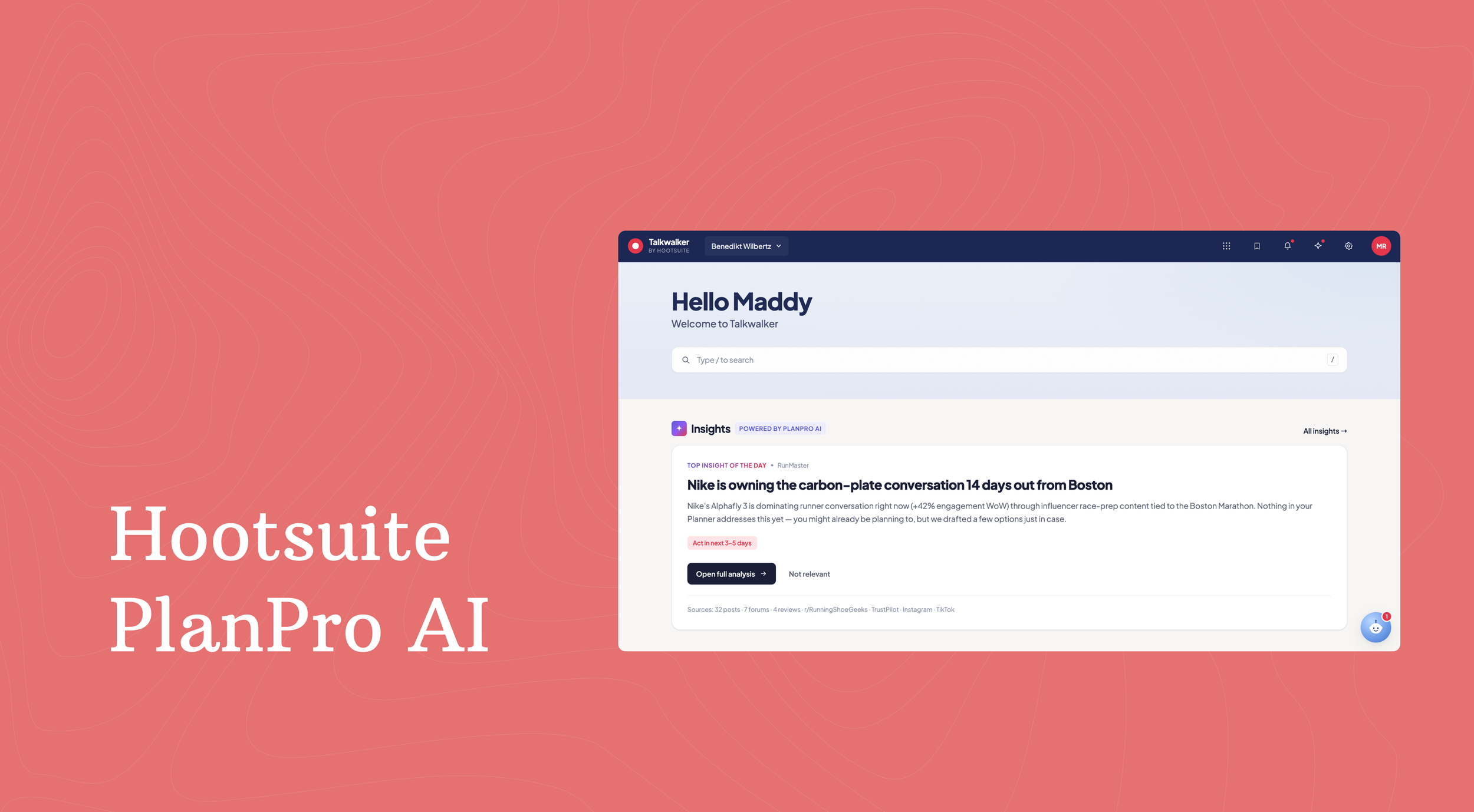
An AI-powered insight system that helps social media teams quickly surface what matters most from performance data and turn it into immediate action.
Instead of manually digging through dashboards, users get prioritized, actionable opportunities based on real-time changes in content performance.
The project was explored through rapid AI prototyping (using Claude) and user testing with social media marketers, which helped validate workflow assumptions and shape the product direction toward real-time decision support rather than traditional analytics.
Focus areas: decision speed, signal prioritization, and reducing cognitive load in fast-moving social media environments.
Problem
Social media managers are expected to react quickly to rapidly changing online trends, but existing analytics dashboards still require users to manually analyze large amounts of performance data before identifying actionable opportunities.
As content velocity increases across platforms, marketers struggle to:
identify meaningful shifts early
prioritize which insights matter most
translate analytics into immediate actions
This creates decision fatigue and slows campaign responsiveness.
Business Opportunity
While many social media platforms provide analytics and AI-generated summaries, few help users understand:
what requires immediate attention
why it matters
what action should be taken next
By evolving from passive reporting to proactive decision support, Hootsuite can:
strengthen its AI positioning
increase platform stickiness
improve engagement with analytics tools
differentiate from competitors focused primarily on data aggregation
Proposed Solution
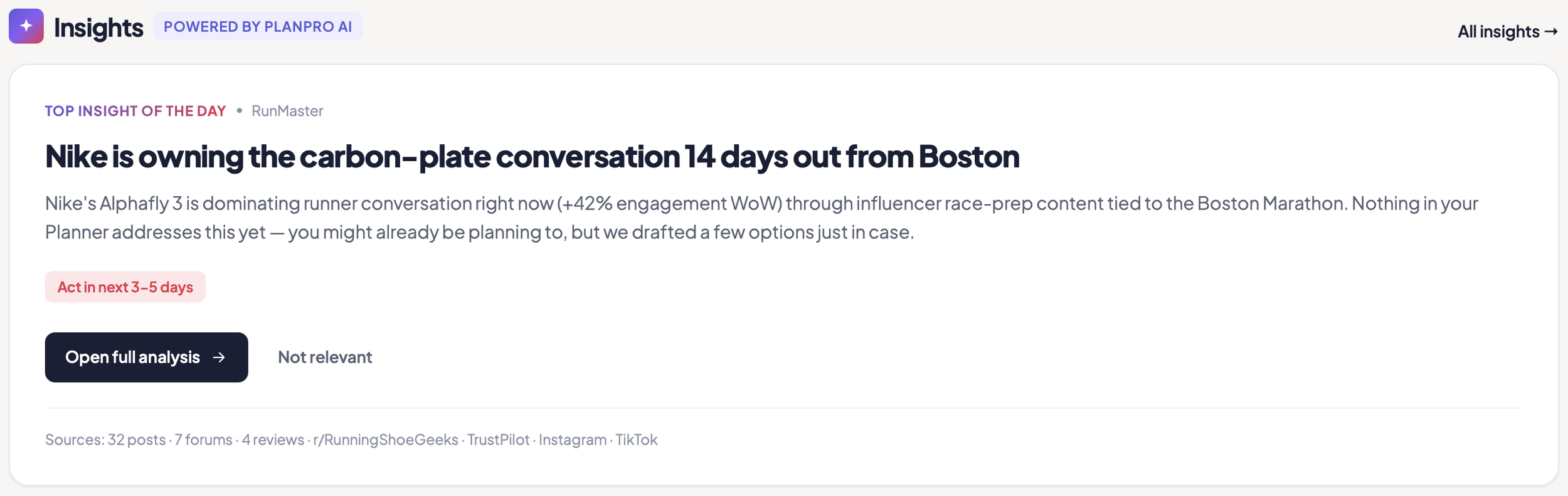
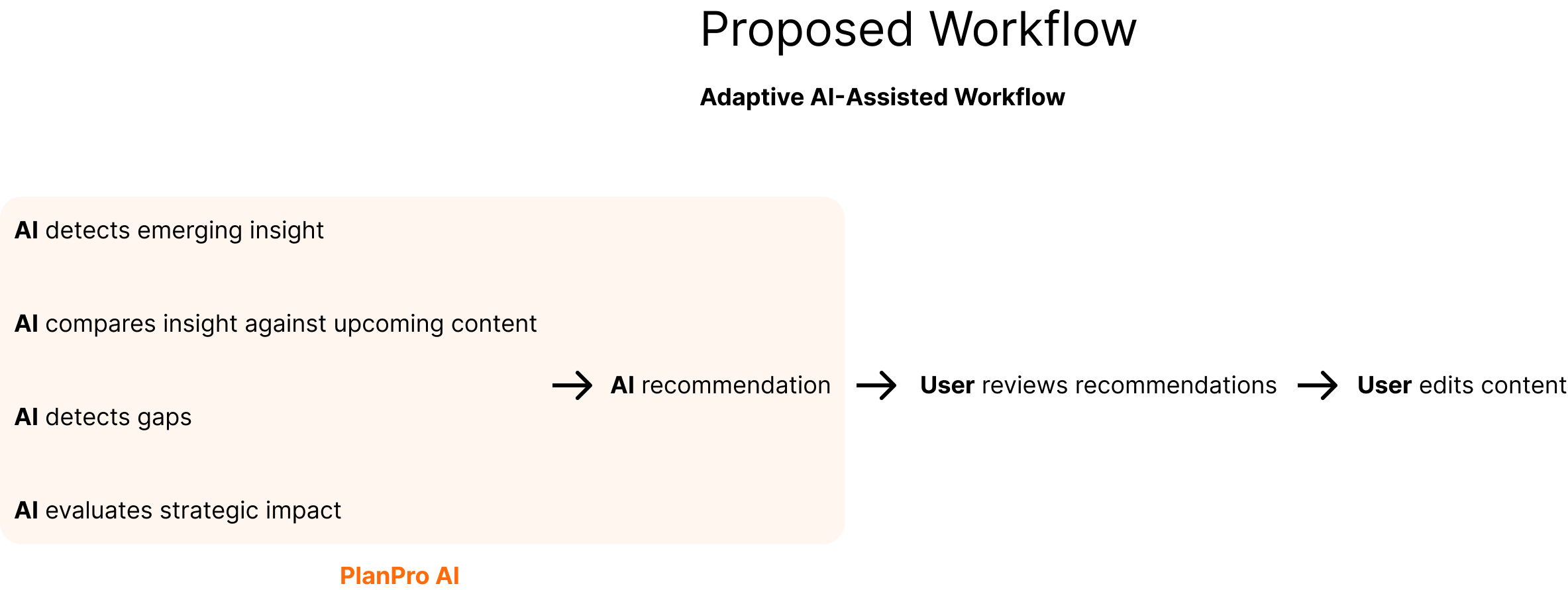
An AI-powered insight system that automatically detects meaningful changes across social performance data and prioritizes actionable opportunities based on urgency, trend momentum, and business impact.
Instead of asking users to search for insights manually, the platform proactively surfaces:
emerging trends
unusual engagement spikes/drops
content opportunities
audience behaviour shifts
recommended next actions

Research & Discovery
Primary Users
Social Media Marketing professionals who need to respond quickly to online trends while maintaining consistent publishing schedules.
To validate the concept quickly, I used Claude to rapidly generate an initial prototype within a few hours. This allowed me to move beyond assumptions early, test real workflows with users, and gather feedback before investing heavily in polished design or engineering.
Through rapid prototyping and user interviews with marketing professionals, several key behavioural patterns emerged:
Social media planning is highly reactive.
Most marketers do not plan detailed posts far in advance because trends, campaigns, and priorities shift constantly. Flexibility mattered more than rigid scheduling.Teams rely on repeatable content patterns.
Instead of creating every post from scratch, marketers typically follow a handful of proven content formats and themes that align with engagement goals and brand strategy.Caption writing is the most tedious part of the workflow.
While visuals receive the most attention, users consistently identified writing captions as the most time-consuming task. Even though audiences may skim the text, marketers still need captions to feel polished, informative, and on-brand.Consistency across contributors is critical.
Maintaining a unified tone and writing style across multiple team members was a major challenge. Users wanted content to feel cohesive and aligned with the company’s brand voice, regardless of who created the post.
These insights shifted the direction of the product from a long-term planning tool into an AI-assisted content workflow focused on speed, consistency, and scalable content generation.
Design Decisions
Insight Scoring Model: PlanPro AI prioritizes recommendations using four weighted factors-
Impact (40%), Urgency (25%), Gap Exposure (20%), Actionability (15%)
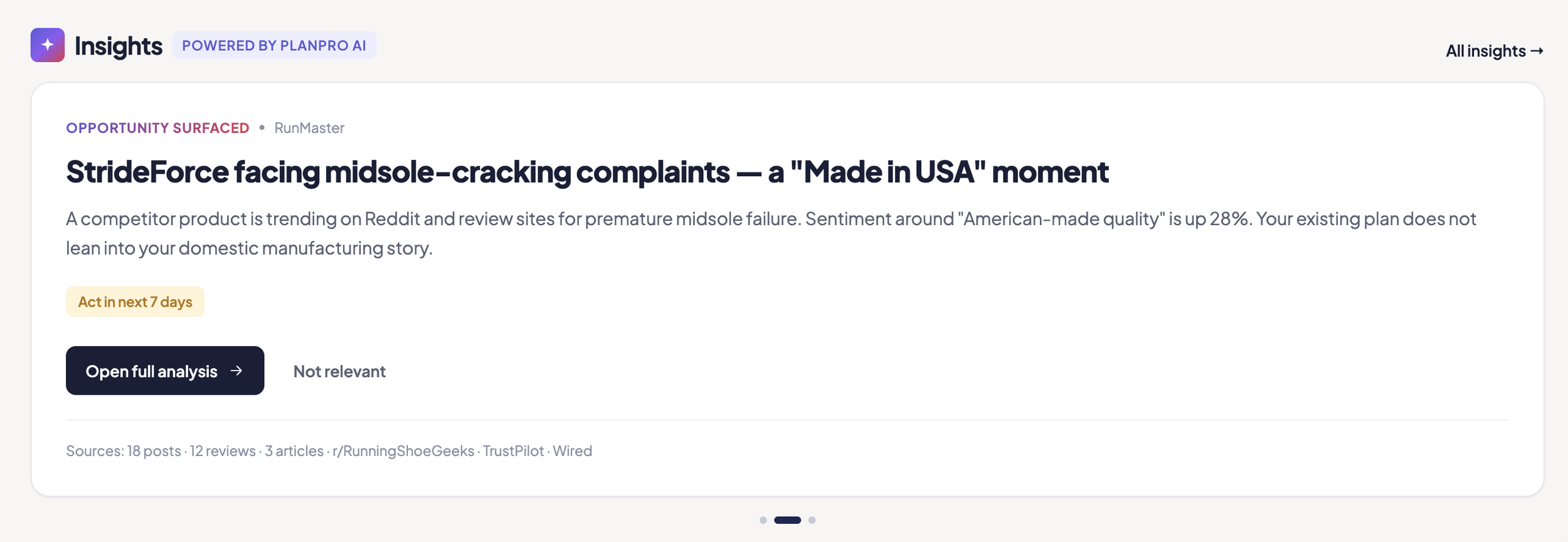
Change from “Three insights a day” to “1 insight a day”: Only show the most urgent one because marketers typically plan only a few days ahead as trends change quickly.
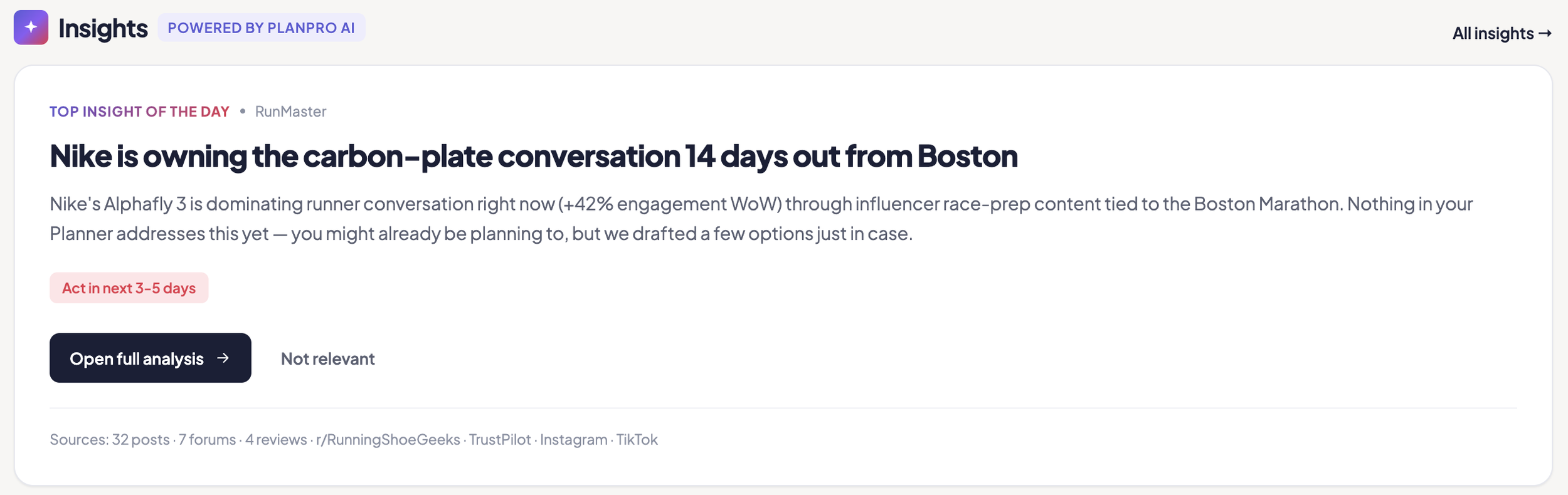
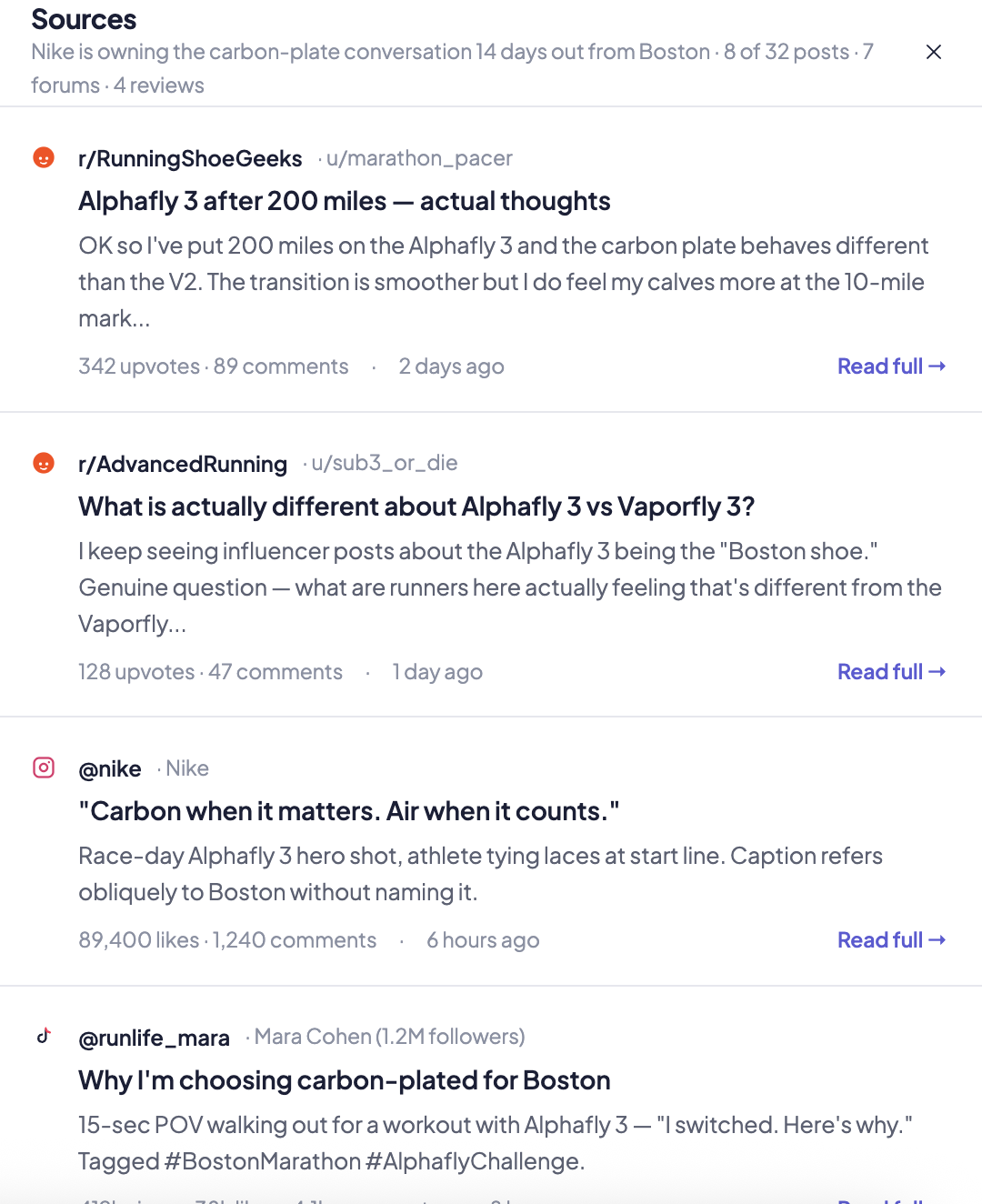
Adding content sources increased trust in AI-generated insights: Showing where the AI pulled data from helped users better understand and trust the recommendations.
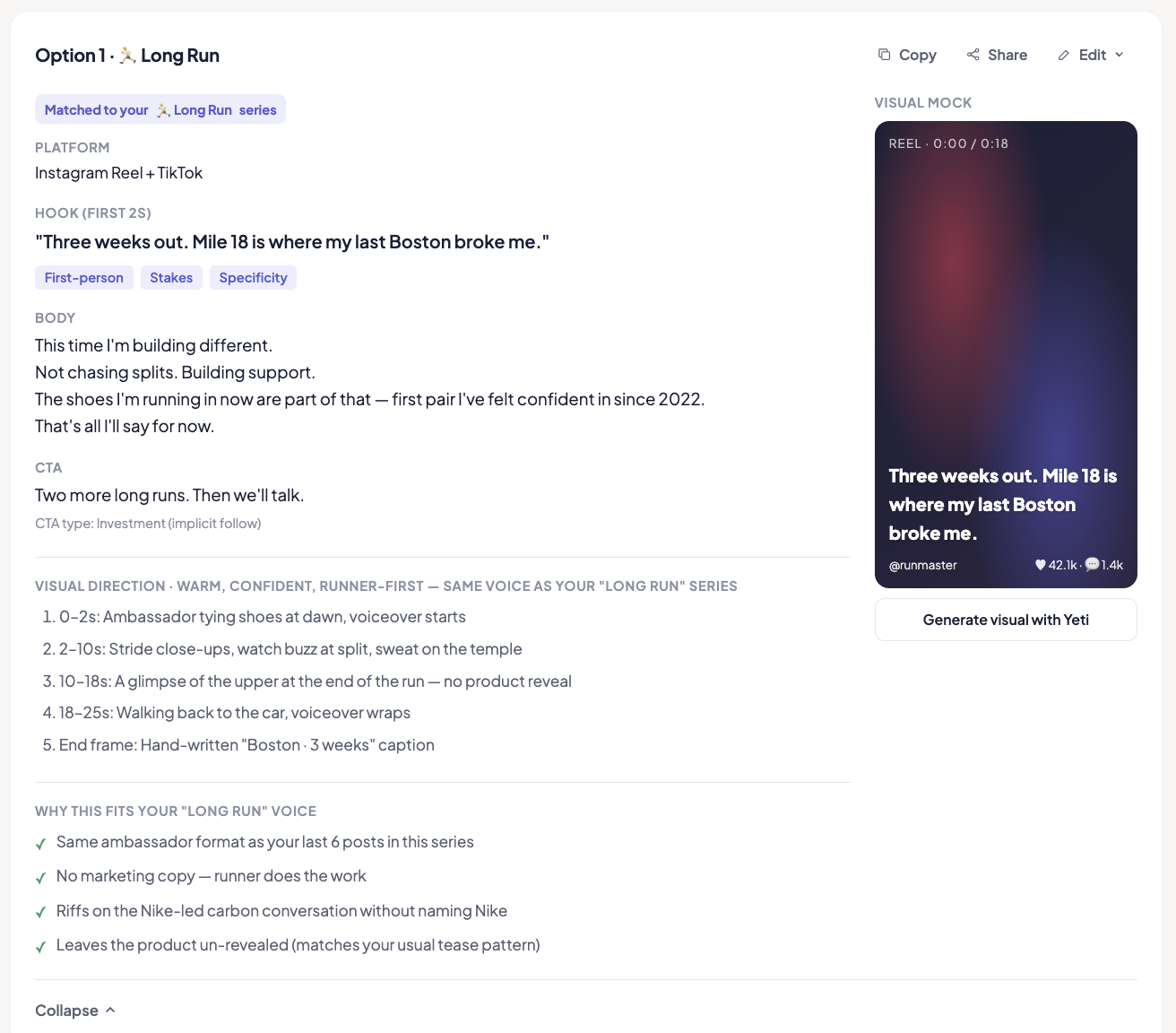
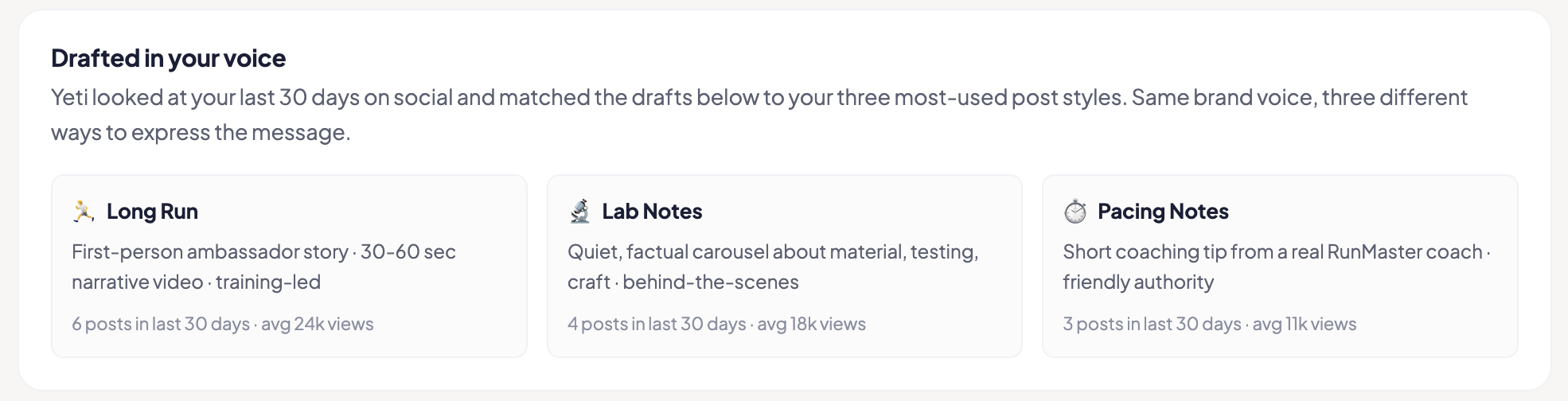
Using past posts helps the AI match user style and tone: By analyzing a user’s previous content, the system can identify common post types, tone, and style to generate more consistent and on-brand outputs.
Applied hook theory to improve content engagement: Used psychology-based hooks to craft attention-grabbing content that better captures audience interest.
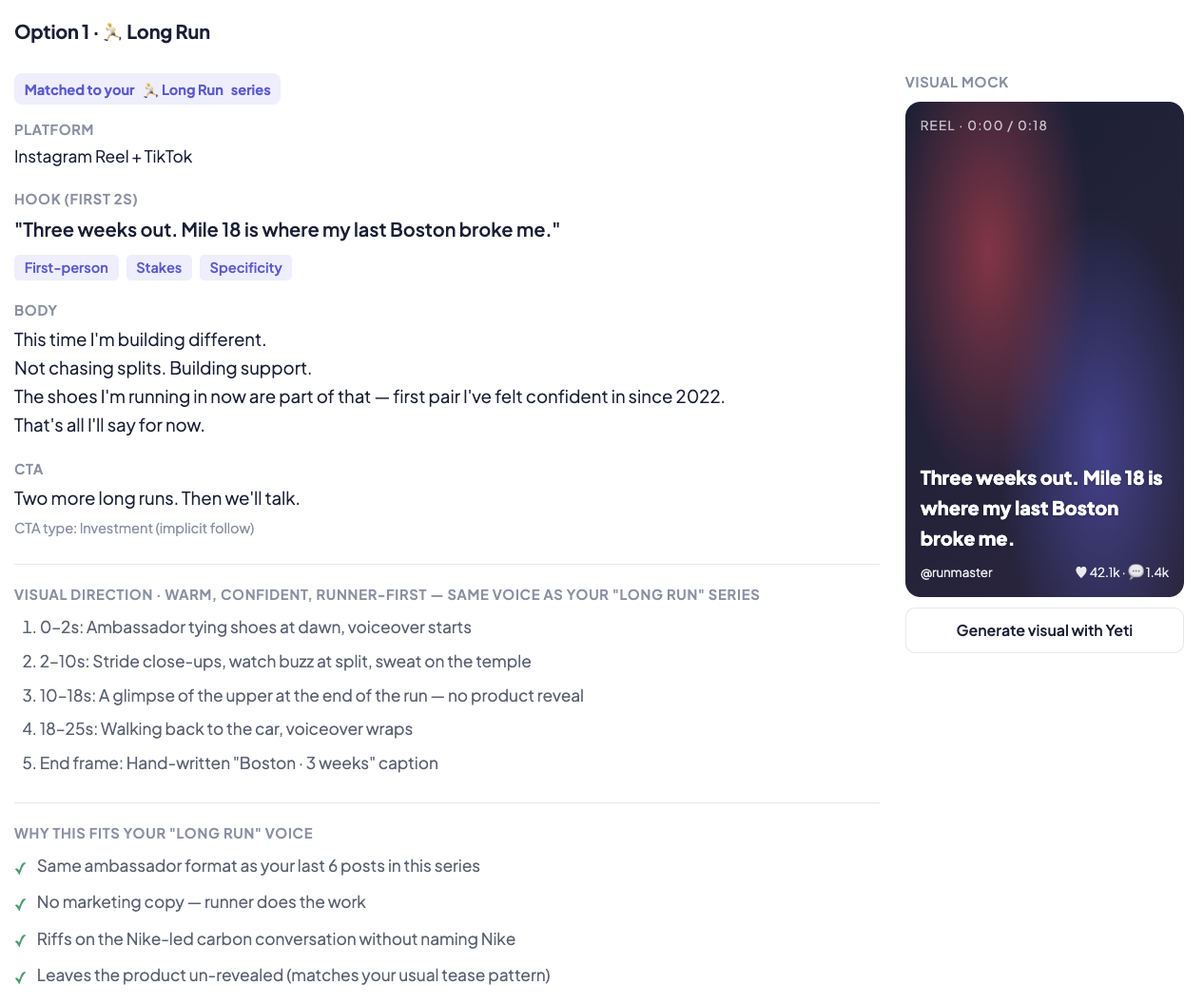
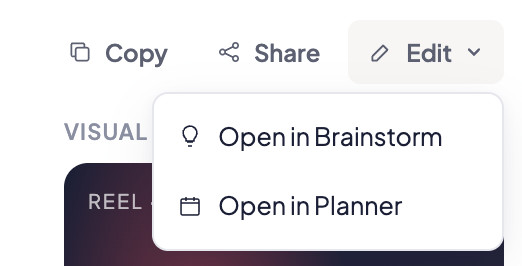
Quick actions enabled faster execution and workflow continuity: Features like “Copy,” “Share,” and “Open in Brainstorm & Planner” let users immediately act on recommendations and seamlessly move content across different parts of the tool.
Design Principles
Human-in-the-Loop AI
The system was intentionally designed to support users — not replace them.
The goal was to:
accelerate decision-making
reduce cognitive load
increase confidence
preserve strategic ownership
AI recommendations remain:
editable
explainable
transparent
dismissible
Edge Cases
Low Confidence Insights: If no insight score exceeds a defined threshold, the system displays: “No significant strategic insights detected today.” This avoids creating unnecessary noise.
Multiple High-Priority Insights: If multiple insights score the same, the interface surfaces all major opportunities with separate recommendation workflows.
Duplicate Content Prevention: Recommendations avoid
repetitive messaging
duplicated campaign structures
conflicting brand narratives
platform saturation
Success Metrics
Potential Product KPIs
Efficiency Metrics
Reduction in campaign audit time
Faster response time to emerging trends
Reduced manual content revisions
Engagement Metrics
Increased interaction with AI recommendations
Increased Planner adoption
Higher recommendation acceptance rate
Strategic Metrics
Improved campaign responsiveness
Increased trend participation rate
Reduced perceived messaging gaps
Constraints
Since this was a personal project, there were a few limitations throughout the process.
I didn’t have access to the actual company product files, internal design system, or customer data, so a lot of the existing workflow and interface decisions had to be inferred from public demos, marketing videos, and product walkthroughs. Because I’m not an actual customer using the platform day-to-day, I could only estimate certain workflows, feature priorities, and edge cases based on observation and research.
I also didn’t have access to real customers, so I recruited people within my network who matched the primary user type: social media marketers and content creators who regularly manage brand content and campaigns.
Since there was no access to internal analytics, business goals, or engineering constraints, the project focused more on validating workflow ideas, user behaviour patterns, and strategic opportunities rather than building a production-ready solution.
A lot of the AI functionality was also conceptual and prototype-based. The goal wasn’t to simulate a fully functional AI system, but to explore how AI could realistically fit into real marketing workflows in a useful and trustworthy way.
Key Takeaways
I used AI as part of the design process itself.
I experimented with vibe coding and AI-generated documentation to rapidly build and iterate on prototypes, adjusting the website through continuous prompting and refinement until it matched the experience I wanted to create.Designing an AI product helped me better understand how AI actually works.
The project pushed me to think deeply about inputs, context, data quality, output behaviour, system limitations, and technical feasibility, not just interface design.AI works best as a collaborator, not a replacement.
Through testing and iteration, I learned that users still want control over strategic decisions, tone, and final judgment. The most effective AI experiences supported human decision-making instead of trying to fully automate it.Trust and interaction design became more important than the AI itself.
The challenge wasn’t only generating content — it was helping users understand why the AI made certain recommendations, when to trust it, and how to confidently work alongside it.